 EquateIt
What to Study These VCE Winter Holidays

What should I study during the winter school holidays for VCE?
The winter break is best used for three things: reviewing your SACs to find where your knowledge actually has gaps, auditing your study design dotpoints with a traffic light system so you know exactly what you do and don’t understand, and getting a head start on the first weeks of Term 3. For Year 12s especially, this is the last clean two-week window before the heaviest SAC term and the October exam run. Come back ahead, not flat. Pick your two weakest subjects and go deep — don’t try to touch everything.
Contents
- Why winter is the most important break in the VCE year
- The two ways students waste the winter break
- The system that actually works: traffic lights and SAC reviews
- The winter study plan: week by week
- Which subjects are worth studying over the winter break?
- Year 12 vs Year 11: this break is different for each
- Staying consistent when it’s cold and dark
- Your winter break checklist
Why winter is the most important break in the VCE year
I remember getting to the middle of the year completely cooked.
Two terms down, the cold had set in, and the idea of opening a Methods textbook over the holidays felt impossible. So I did what most students do — I told myself I’d start properly next week, and let the whole break slide.
Then Term 3 hit. And it hit hard.
Here’s what nobody really spells out: for Year 12, Term 3 is the heaviest term of the entire year. It’s where most of your remaining SACs are scheduled, and it runs straight into the exam period in October and November. The winter break is the last stretch of time where nothing is due the next day.
Waste it, and you walk into the hardest term already behind. Use it well, and you start Term 3 with breathing room — not scrambling to learn new content and revise at the same time.
VCE is a marathon, not a sprint. Consistent, focused effort over a long period is what makes the difference — not one heroic grind session. The winter break is a checkpoint, not a finish line. The students who treat it that way are the ones who finish Term 3 with marks they’re proud of.
The two ways students waste the winter break
From running a tutoring company and working with VCE students every year, I see the same failure modes repeat.
The first is doing nothing. Resting the whole fortnight, telling yourself you’ve earned it, walking back into Term 3 cold. You have earned a rest. You haven’t earned two solid weeks of it right before the most important term.
The second looks like effort but isn’t. Grinding eight hours a day across all six subjects until you’re flatter on the last day than you were on the first — then Term 3 starts and there’s nothing left. This one is sneakier because it feels productive. It isn’t.
The sweet spot is neither of these. It’s finishing your homework, setting aside a handful of days with a clear plan, and doing a few hours of targeted work on the right things. Five study days over the two weeks, four hours maximum per day. Not every day. Not all subjects. The right work, done well, on a plan you’ve actually made in advance.
The system that actually works: traffic lights and SAC reviews
Most guides tell you to “revise your weakest topics.” That’s not wrong — it’s just not specific enough to act on. Here’s the system I give to students.
Step 1: Traffic light your study design dotpoints
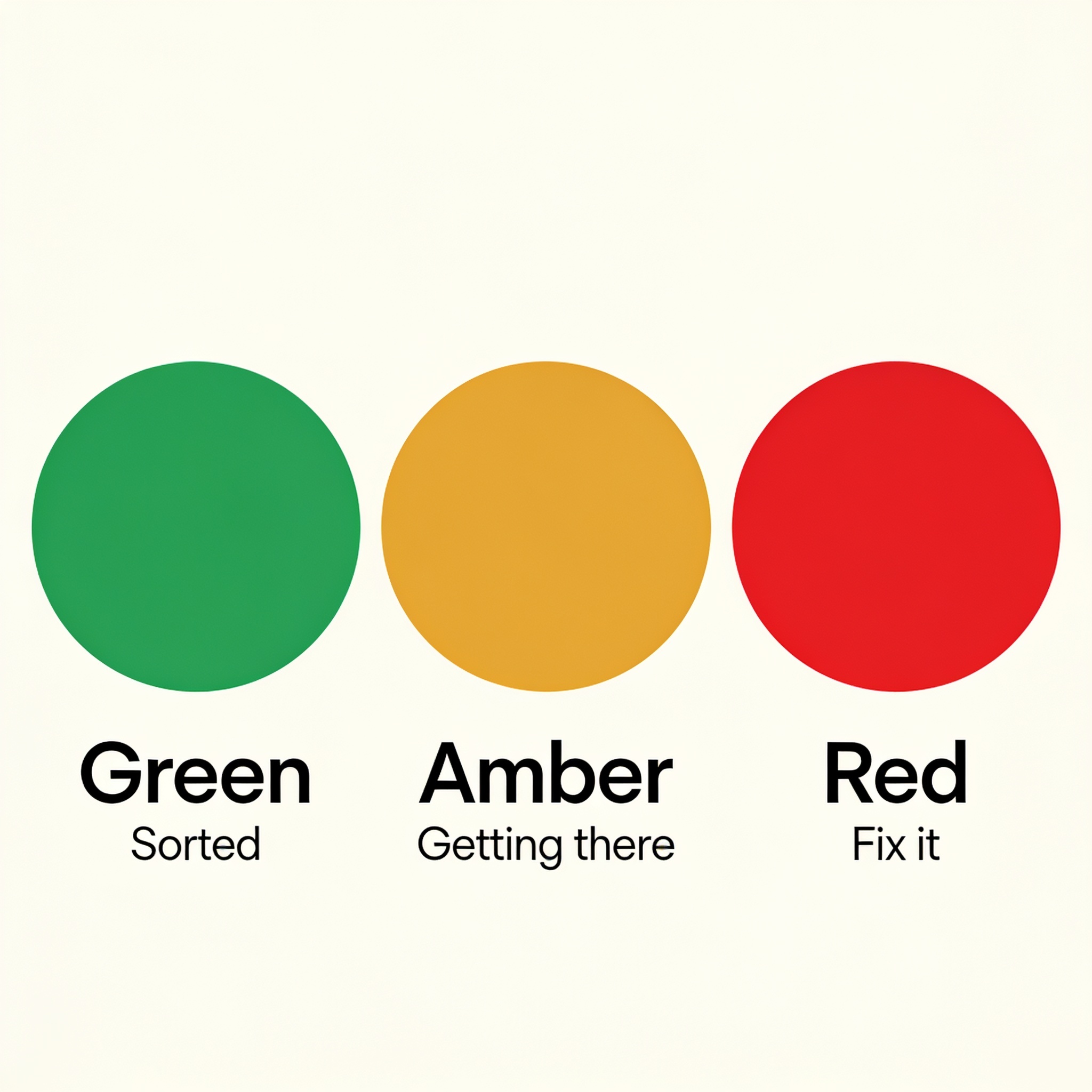
Every VCE subject has a study design — a list of exactly what you’re expected to know. Get it out. For each dotpoint, assign a colour:
- 🟢 Green — I understand this, I have good notes, I could answer an exam question on it
- 🟡 Amber — I know roughly what this is but I’m not confident
- 🔴 Red — I don’t understand this, my notes are thin, or I haven’t covered it yet
This takes about twenty minutes per subject. What you end up with is a map — not a vague feeling about what you’re “bad at”, but a specific list of the exact concepts that need work. Amber and red dotpoints are your winter break study list.
Step 2: Review your SACs — this is the most underused tool in VCE
Your Semester 1 SACs are the best data you have about where your knowledge actually breaks down. Most students look at the mark, feel something about it, and move on. That’s a waste.
Sit down with each SAC and redo every question you got wrong. Don’t look at the solution first — try it again. If you get it right this time, it was probably a simple mistake or nerves. If you get it wrong again, that’s a real gap. Map each wrong answer to its study design dotpoint — that tells you exactly which reds to prioritise.
Then use AI to go deeper. Give it the dotpoint you’re struggling with and the section of your textbook covering it. Ask it to explain the concept in plain terms. Ask it follow-up questions until it clicks. Then ask it to test you — get it to give you three questions on that concept and mark your answers.
This is not a shortcut. It’s the most efficient path from confusion to understanding, and it’s sitting there unused by most of the students you’re competing with.
The winter study plan: week by week
Never start a study session without a clear plan for what you’re doing in it. “I’ll study Methods” is not a plan. “I’ll work through the chain rule dotpoint, do six practice questions, and check my working against the solutions” is a plan. The difference in how much you get done is enormous.
Week 1: diagnose and close the gaps
- Day 1: Traffic light your two weakest subjects. Pull out your SACs and redo the wrong questions.
- Days 2–4: Work through your red and amber dotpoints in your weakest subject. One concept at a time. Notes first, then practice questions. No moving on until you can do a question cold.
- Days 5–6: Repeat for the second subject.
- Day 7: Off. Properly off.
Week 2: get ahead, then build stamina
- Read into the first two weeks of Term 3 content in your priority subjects. The first classes back should feel like revision, not brand-new material.
- Sit at least one full, timed practice exam. Exams are close enough now that stamina is its own skill — you only build it by sitting whole papers under real conditions.
- Leave the last day or two deliberately loose. You want to start Term 3 rested, not wrung out.
The logic is simple: Week 1 closes what’s already broken. Week 2 puts you in front of what’s coming.
Which subjects are worth studying over the winter break?
Not every subject pays back holiday time equally.
Maths (Methods, Specialist, Further): highest priority. These are procedural — the method has to be automatic to survive exam pressure. Your Semester 1 report tells you which chapters to target. Don’t sit a full practice paper before you’ve closed the gaps it would expose; work by dotpoint first, then move to full timed sections in Week 2.
English and Literature: rising urgency. Term 3 is English SAC season in most schools, and those SACs carry real weight. Use the break to get across your texts properly — make quote lists, read the books again if you haven’t recently, and write at least one essay under timed conditions. Don’t spend the fortnight polishing one piece at the expense of everything else.
Sciences (Chemistry, Physics, Biology): content-heavy, do it now. Make proper cue cards — one concept per card, definition on one side, worked example on the other. If you’re behind on content, the holidays are when to catch up. If you’re current, do past exam questions on the units you’ve finished.
Humanities (History, Legal, Economics): keep ticking unless you’re behind. These reward consistent coverage over the whole year more than a holiday blitz. Don’t let them eat the time your priority subjects need.
Year 12 vs Year 11: this break is different for each
If you’re in Year 12, treat this as the serious one. The consolidate-then-get-ahead structure above is built for you. You have one more term and then exams. There’s no later.
If you’re in Year 11, the stakes are lower — but the opportunity is bigger than it looks. The habits you build now (traffic lighting your dotpoints, reviewing SACs properly, planning each session before you open a book) are exactly the habits that make Year 12 survivable. Run a lighter version of the plan. You don’t need five study days or four hours per session. You need to prove to yourself that the method works before the marks actually matter.
Staying consistent when it’s cold and dark
Winter holidays are harder to stay consistent in than summer or Easter, and it’s not your imagination. It’s cold, it’s dark by five, you’re two terms deep into a long year, and motivation is genuinely lower.
So don’t rely on motivation. Build the structure so you don’t need it.
- Cap sessions at 90 minutes. Concentration drops after that whether you feel it or not. Break, move around, come back.
- Study earlier in the day. The late-afternoon session you planned quietly disappears once it’s dark and cold outside. Front-load it.
- Have things to look forward to. Don’t sacrifice your social life entirely. Keep making plans with friends. Have things on the calendar. The students who burn out in October are usually the ones who had nothing to look forward to in July. Taking your mind off VCE for whole evenings is not wasted time — it’s what keeps you running through Term 3.
- Track what you did, not what you planned. A short log of “done today” beats a colour-coded timetable that just makes you feel guilty.
- One full day off per week. Not light study. Actually clear. You’re not going to remember the three dotpoints you covered on the day you had no energy to think — but you will notice the difference when Term 3 starts and you’re the one who still has something left.
Your winter break checklist
By the time Term 3 starts, you want to be able to answer yes to all of these:
- Have I traffic-lighted the study design dotpoints for my two hardest subjects?
- Have I re-done every question I got wrong in my Semester 1 SACs?
- Have I worked through my red dotpoints with notes and practice questions?
- Have I sat at least one full, timed practice exam?
- Have I read ahead into the start of Term 3 content in my priority subject?
- Do I know my Term 3 SAC dates?
Six yeses, and you start the hardest term ahead of most of your cohort.
If you want help targeting the exact gaps your Semester 1 results exposed, EquateIt’s tutors work through your SACs with you and build a focused Term 3 plan from the results — so you’re not guessing at what to fix. Book a free assessment →